


Our Environment Matters - We are working for a Sustainable Future
We at TCS Biosciences Ltd are fortunate enough to work and live in a beautiful part of the English countryside. As a result, we have always been aware of our environmental impact on a local, national and global scale.
TCS were an early adopter of the ISO14001 management system, a standard we have held since 2013. We have therefore already made significant progress against our environmental targets:
Electricity - Buildings
- LED Lighting throughout our production areas with high frequency tubes elsewhere
- PIR operated lighting - lights are activated only when they need to be in low use areas
- Natural light tubes have been installed in specific office areas reducing dependency on electric lighting
- Recent refurbishment has seen increased insulation of our premises, ensuring energy is used cleanly and efficiently
- Use of contracted sterilisation services, eliminating the need for power hungry equipment
EV / Motors
- We have a growing fleet of Mild Hybrid, Plug-In Hybrid and Pure Electric Vehicles
- 2 x 7kw EV chargers have been installed. These chargers utilise solar generated power as well as mains supply
Power Supply
- 28% of all electricity used by TCS is generated by the 232 solar panels we have installed on the roofs of our facilities
- Electricity contracts have been negotiated to ensure that 100% of our energy bought in for our main site and 55% for Park Leys site is purchased from renewable sources
- Our aim is to move to 100% renewable sources by 2025
- Our carbon footprint for electricity consumption has decreased by over 75% since 2012
Water
- Our water consumption had reduced by 80% from 30m3 per week to 6m3
- We continue to monitor our wastewater and work within the scope of our discharge consent. We are inspected annually by WAVE.
Waste
- Despite being significantly reduced already, our target is to send zero waste to landfill by 2025
- Where possible, our offices are paperless. We actively discourage unnecessary printing
- Recycling initiatives are in place for carboard, plastics, cans and paper
- Unused / damaged pallets are recycled
- Waste Electrical and Electronic Equipment recycling (WEEE) is collected internally and is sent to approved partners for recycling and disposal
Carbon Emissions
- 75% reduction over the last 10 years
- Target to reduce by a further 25% by 2030
Net Zero
TCS Biosciences is committed to responsible, transparent operations and measurable environmental progress. As part of our sustainability strategy, we are on track to achieve net-zero greenhouse gas emissions across Scope 1 and Scope 2 by 2027 well ahead of our 2030 target.
Using recognised methodologies via the Climate Essential platform, our 2025 emissions were calculated at 91,786 kg CO2e. To offset and reduce this impact, we have implemented targeted, nature-based initiatives, including the planting of 3,951 trees projected to remove 11,000 kg CO2e by 2026 and supporting UK woodland conservation through a donation to the Woodland Trust, helping protect thousands of additional trees with significant carbon absorption potential.
Combined with ongoing emissions reduction across our operations, these actions position TCS as a proactive leader in sustainable practice. Our continued commitment to ISO14001:2015 certification, participation in EcoVadis assessments and registration to the Science Based Targets initiative (SBTi) further reinforces our commitment to independent benchmarking and continuous improvement.
Sustainability remains integral to our business driving us to operate responsibly, reduce environmental impact, and support a more sustainable future for science.


As well as the significant progress made above, we also monitor our use of Fossil Fuels, Fugitive (F Gas) Emissions, Greenhouse Gas (GHG) Emissions and are actively monitoring our carbon footprint with a view to significantly decreasing them as soon as possible. Our membership of the Green Essentials Scheme underlines this commitment. Close monitoring scope 1, 2 and 3 emissions will aid us in our carbon reduction targets.
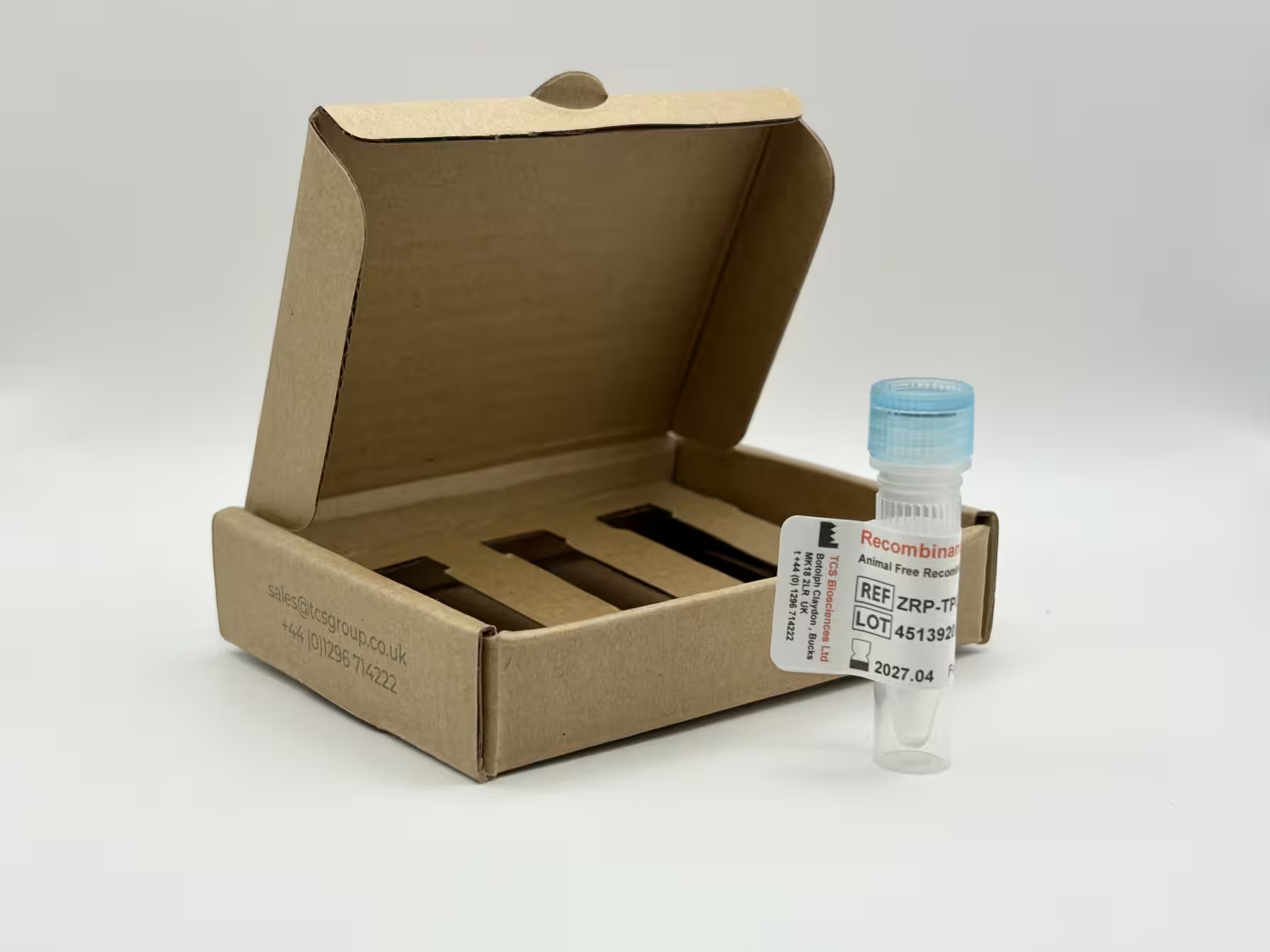
In 2023 we have moved away from using vinyl tape on packages and will no longer use unnecessary absorbent materials in orders that do not require it.
We have achieved a lot in the last 10 years and have plans in place to further reduce our environmental impact by increasing clean energy use, expanding our solar capacity, harvesting rainwater and reducing non-recyclable waste.


 View past online orders
 Manage addresses
 Save basket items


